
Pride Picnic UvH x HKU: Queer life takes center stage
Review by Jake Smit and Marieke Folkers
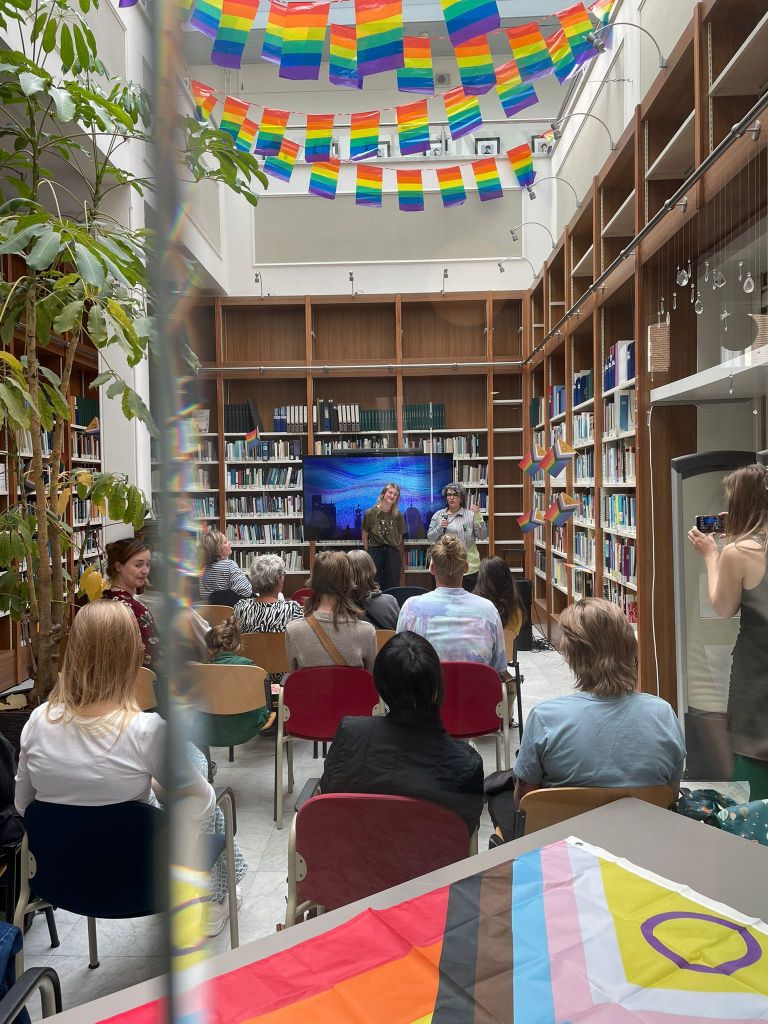
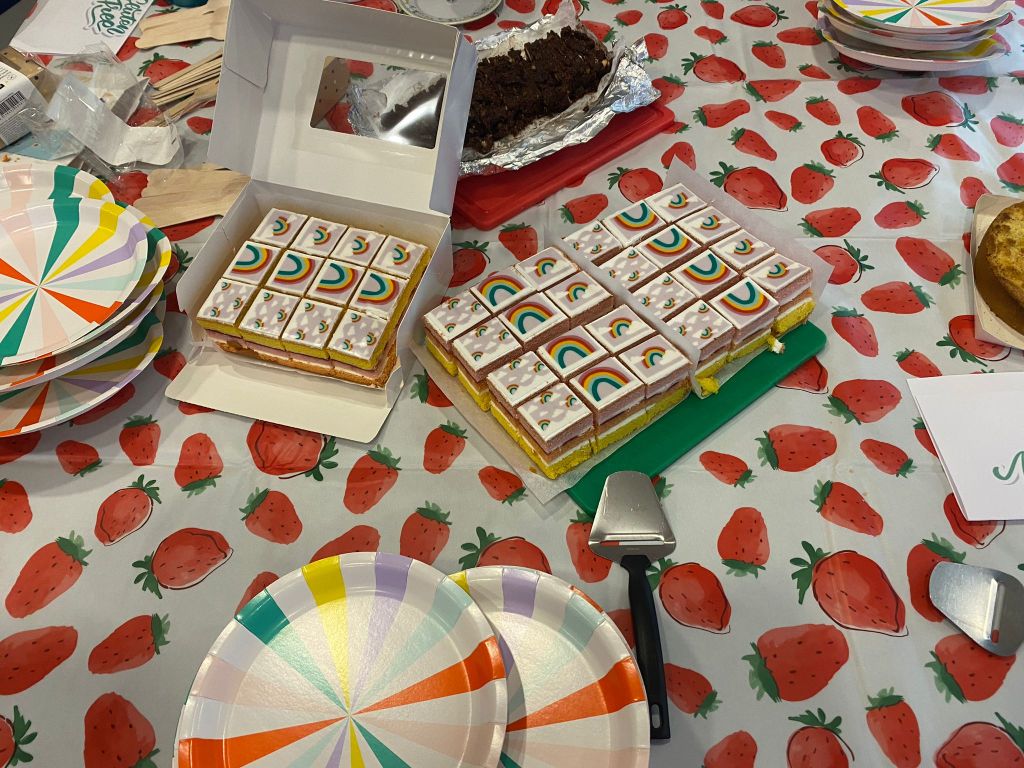
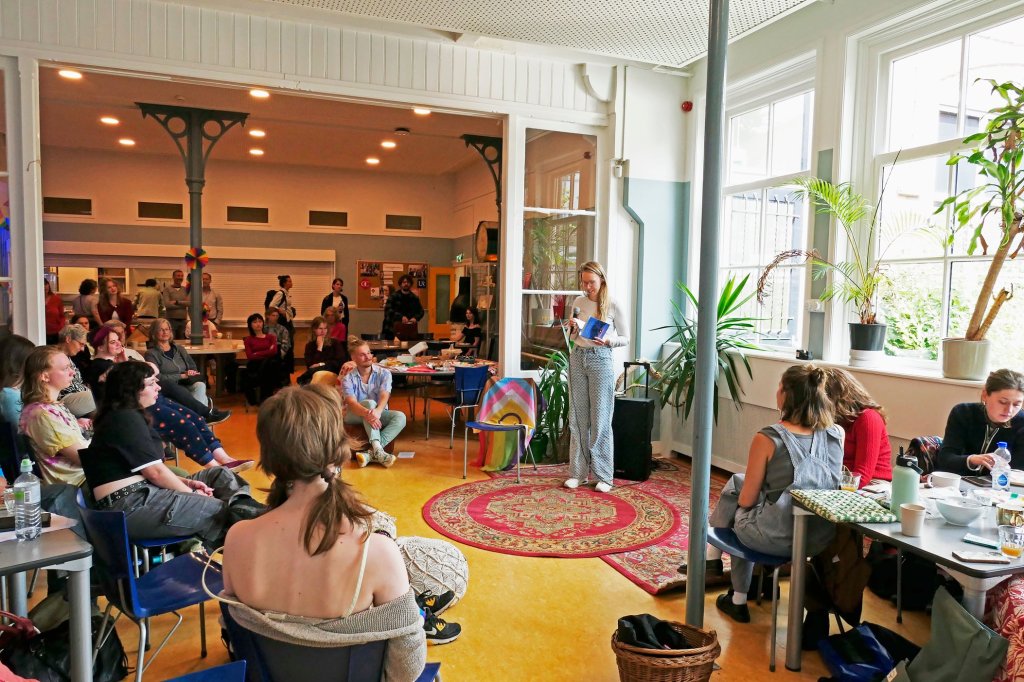
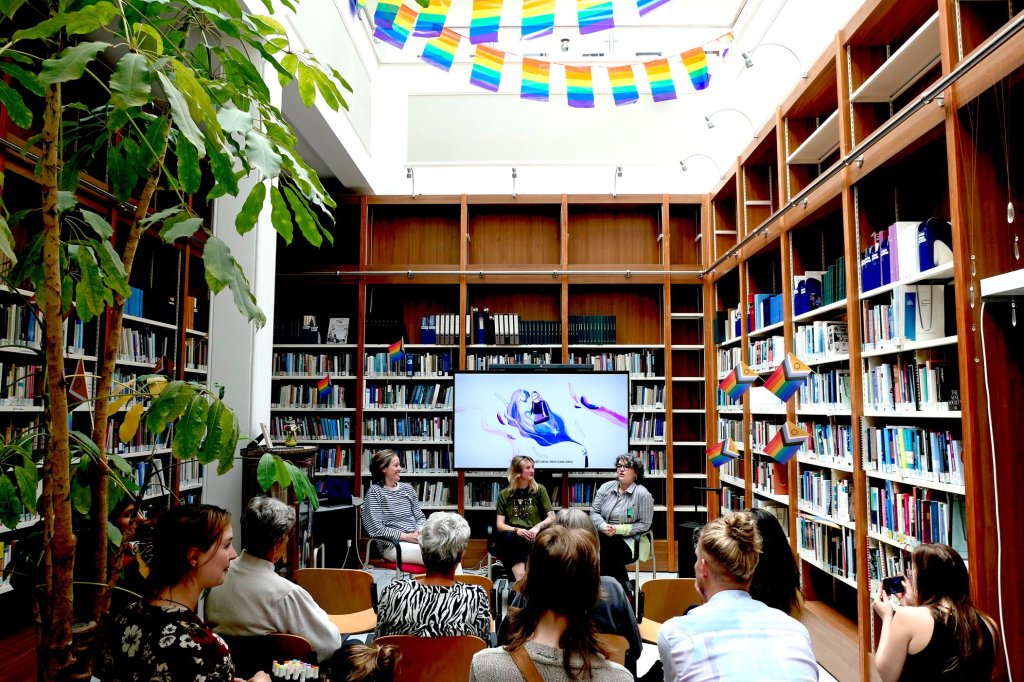
What does justice for queer families look like? How is queerness marginalized within educational institutions? How is queer-inclusive care designed? These questions were addressed during the Pride event jointly organized by the Utrecht School of the Arts (HKU) and the University for Humanistic Studies (UvH) on Thursday afternoon, June 5th. The event brought together more than 80 students and staff to enjoy homemade cakes, rainbow cream puffs, queer art, and—above all—community.
The afternoon began with performances by three UvH artists: Samira van der Loo, Leo van den Bemt, and Rana Nazari. Their poetry, spoken word, and stories offered space for confusion, vulnerability, and resistance; from the question “Who am I when I let go of all gender expectations?” to an ode to queer love between women and the importance of allyship.
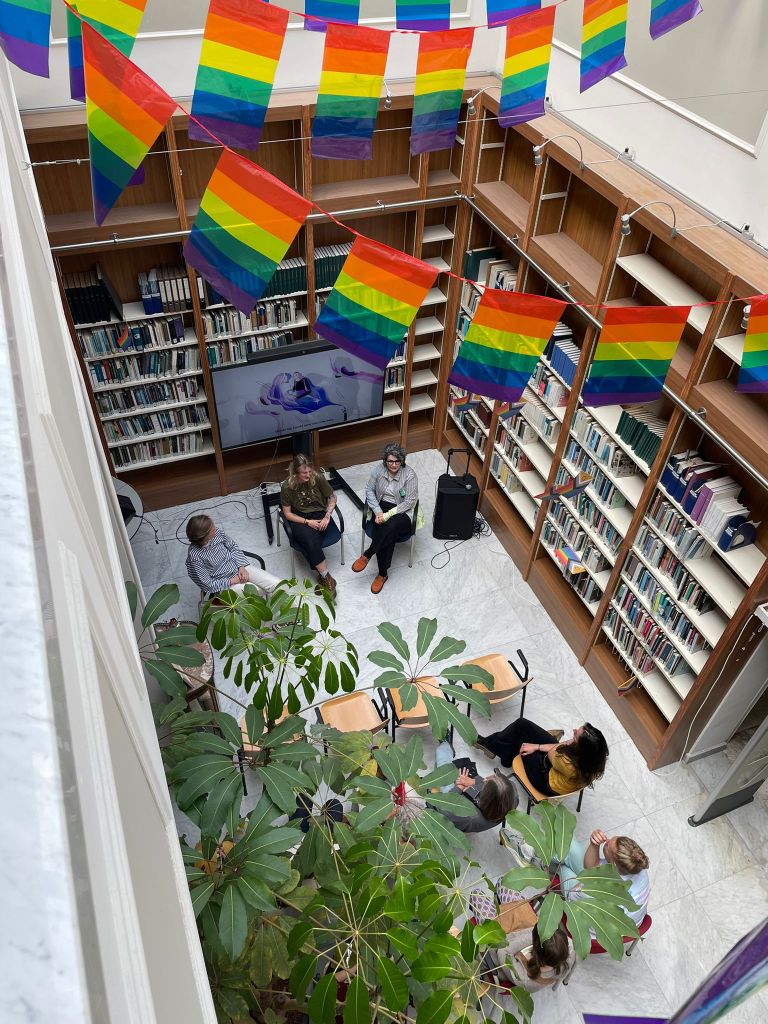
Next, HKU alumna Iris Pontoni screened her short animated film about her two mothers and their search in the 1990s for someone to help fulfill their desire to have children—an ode to queer families and chosen parenthood. She discussed this with HKU lecturer Fabiola Camuti and UvH PhD candidate Annemijn van der Schaar. The film addressed not only legal obstacles and heteronormative questions like “Why don’t you have a father?”, but also queer joy, such as growing up without gendered norms and expectations.
The afternoon concluded with Rana’s exhibition Queerness in Iran, in which historical queer art entered into dialogue with today’s restrictive politics. Her central message: “If loving is savage, call me feral,” is a powerful call to defend love, especially where it is under pressure.
Central to the program was transitional justice thinking—an approach that invites us not only to ask what’s wrong, but especially to consider how things could be different. How can we reverse injustice and translate it into justice? In thematic group discussions, participants explored forms of injustice and justice surrounding queer families, care, and education. These conversations resulted in a series of telling protest signs, displayed in the library. One of the signs carried the message “Embrace instead of Erase,” a poignant line from Rana’s speech.
This call for transitional rethinking was also audible in the performances of Samira, Leo, and Rana. With their words, they broke down walls and imagined new possible futures for themselves and for the world. This also resonated in Iris’s film, in which just structures, such as the legal recognition of two mothers, literally make new life possible. And in the exhibition, where fictional, never-published headlines called for a form of journalism that dares to make room for queer pain and truth.
The event was both a celebration and a form of protest—an afternoon that showed how many ways queerness enriches lives, and how queerness envisions a multitude of just, equal, and less normative futures.
The content and community-driven approach of this afternoon were realized thanks to the careful coordination and curation of Marieke Folkers and Jake Smit. The Pride Picnic was made possible in part by HKU Utrecht, the UvH Steering Committee for Diversity, Equity & Inclusion, the research project Dialogics of Justice, and Meaningful Artistic Research (MAR).
A Dutch version is available below.

 Homepage