
Relational approaches have become increasingly prominent in the social sciences and humanities, resulting in the so-called ‘relational turn’ (Dépelteau 2013). Rather than focusing on isolated actors or events, such approaches seek to understand phenomena through their relations: between people, practices, institutions, histories, and systems of power. But what does it mean to work relationally in research? Dialogics of Justice operationalizes a relational approach in bringing various cases of historical injustice into relation to one another. We convened a study seminar at the University of Humanistic Studies, where Lily Abichahine, Nicole Immler, Siri Driessen, and Bram van Boxtel shared their experiences on relationality as an analytical and methodological orientation, with particular attention to the challenges caused by relating the experiences of highly different groups of people and institutional players to each other.
Lily Abichahine, lawyer, artist, and DoJ PhD-candidate, provided a performance lecture that performed relationality regarding historical injustice and provided input into questions to discuss,such as: How can connections between distinct yet entangled cases be made visible without flattening differences or producing false equivalences? What does a relational perspective enable us to see, and where does it raise new conceptual, ethical, or political questions?
The seminar brought together different ways of thinking and experimenting with relationality and served as an exploratory space for collective reflection.
It also functioned as a preparatory moment for the final conference of Dialogics of Justice 15-17 April at the UvH, where we will explore the relationality between all cases studied.
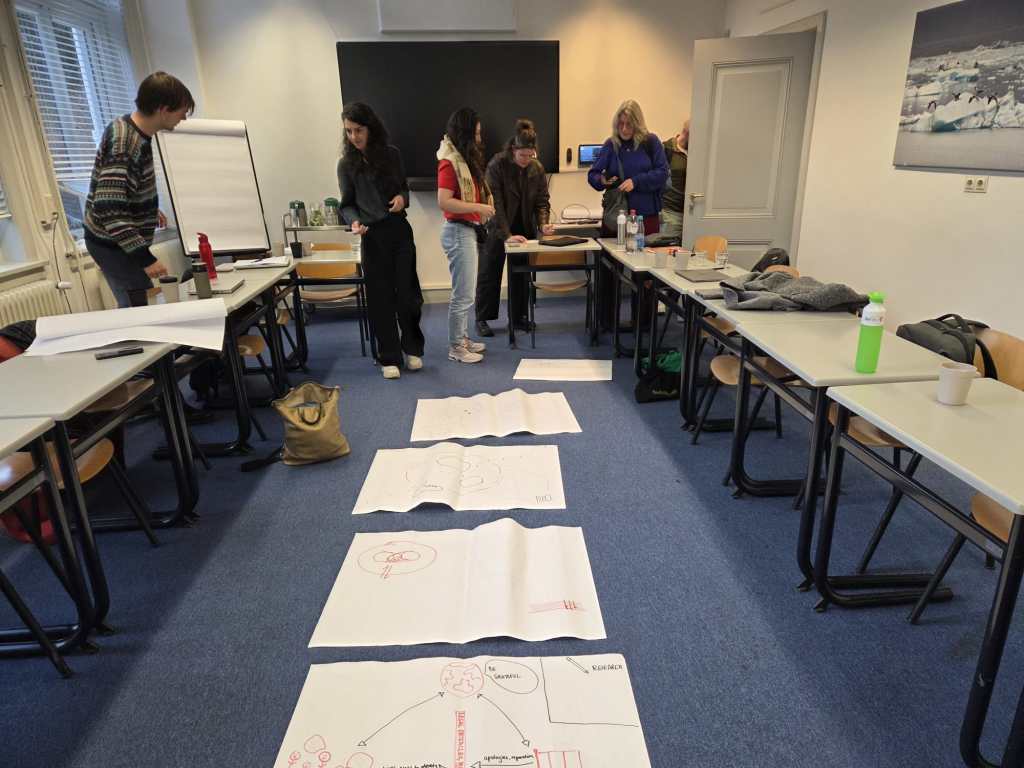
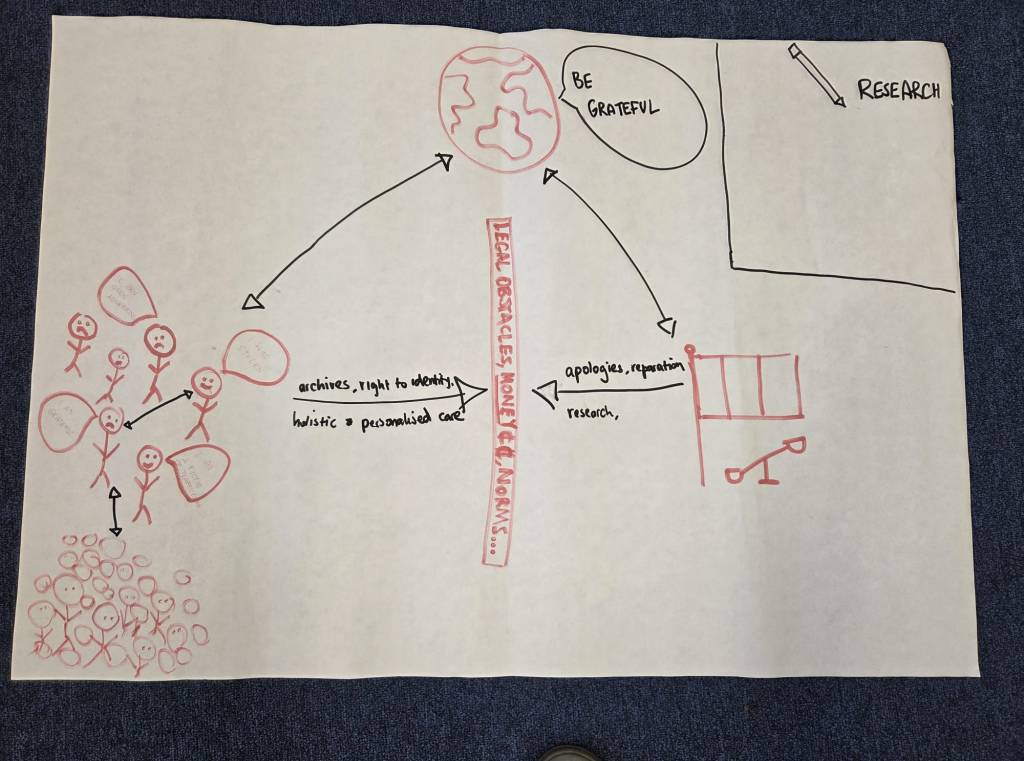
Photos by Nicole Immler

 Homepage