
Nicole Immler on what is meant by ‘repair’ when claiming reparations for colonial wrongs. She discusses Transformative Justice for the Dutch Slavery Past.
Lees verder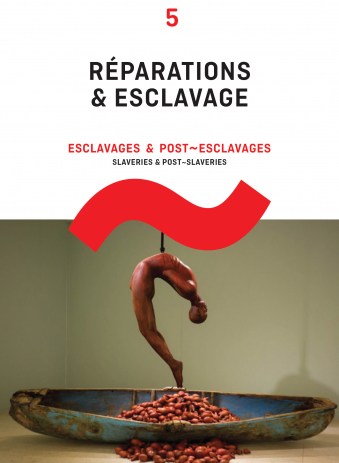
Nicole Immler on what is meant by ‘repair’ when claiming reparations for colonial wrongs. She discusses Transformative Justice for the Dutch Slavery Past.
Lees verderThe Dialogics of Justice Project is set to have a panel on the conference hosted by Utrecht University on reparations for historical injustices. More details will follow soon.
Lees verderThe aim of this conference is to re-examine the 1952 Wassenaar negotiations, blending perspectives from history, law, and international relations. Nicole Immler will join the conference and chair a panel.
Lees verderOn 24 and 25 September Obiozo contributed in the second edition of the Summer School on Climate organised for students at University of Gent. How do we discuss the complex matters of climate change and environmental pollution? Which perspectives and voices can and must be part of this conversation? Together with Peter Aers (Building Conversation) […]
Lees verderNiké Wentholt & Luna Bonvie
In May 2021, the Dutch district court in The Hague came to a long-awaited conclusion in a so-called ‘climate case’, deciding in favour of a group of Dutch plaintiffs and ordering oil-corporation Royal Dutch Shell to reduce its CO2 emissions by net 45% within 10 years. Although the ruling is globally considered as a legal victory in the battle against climate change, its importance can best be understood from a broader perspective. Niké Wentholt and Luna Bonvie wrote a blogpost about the meaning of the judgement from a social-legal angle.
Lees verder
1/7/2021
As of July 1, 2021 , our principal investigator Nicole Immler has been appointed professor of Historical Memory and Transformative Justice at the University of Humanistic Studies. The new chair responds to the juridification of society, and aims to contribute to a more human-centred approach to social justice.
Lees verderAll team members of the Dialogics of Justice project have participated in the two-day virtual conference on Interdisciplinary Perspectives in Transitional Justice, hosted by the Loughborough University Centre for Research in Communication and Culture. The versatile program included panels on Transitional Justice and Politics of Recognition, Transitional Justice and Memory, and Transitional Justice, Human Rights, […]
Lees verder
01/07/2021 Podcast on the Keti Koti debate – Podcast Pluralistiek
Nicole Immler participated in a podcast hosted by the University of Humanistic Studies (Utrecht). On the 1st of July each year, the celebration of Keti Koti marks the abolition of slavery in Suriname. Nicole and student Farach Winter talked about the importance of dialogue and the meaning of reparations, especially in light of the ongoing debate on recognition of the colonial history of the Netherlands.
Lees verder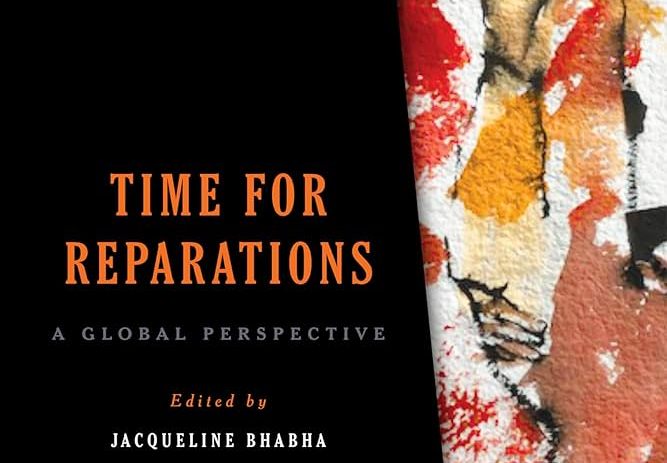
Chapter by Nicole Immler on Colonial history at court: Legal decisions and their dilemmas.
Lees verder
15/06/2021 ‘Het gesprek over Srebrenica is nu aan ons’ – Trouw
Niké Wentholt and Marrit Woudwijk wrote an opinion piece on the need for debate after legal procedures. They argued that two recent legal developments with regard to the 1995 genocide in Srebrenica demonstrate the limitations of legal procedures and therefore this momentum should be used as an opportunity for a broader debate on recognition and justice.
Lees verder Homepage