
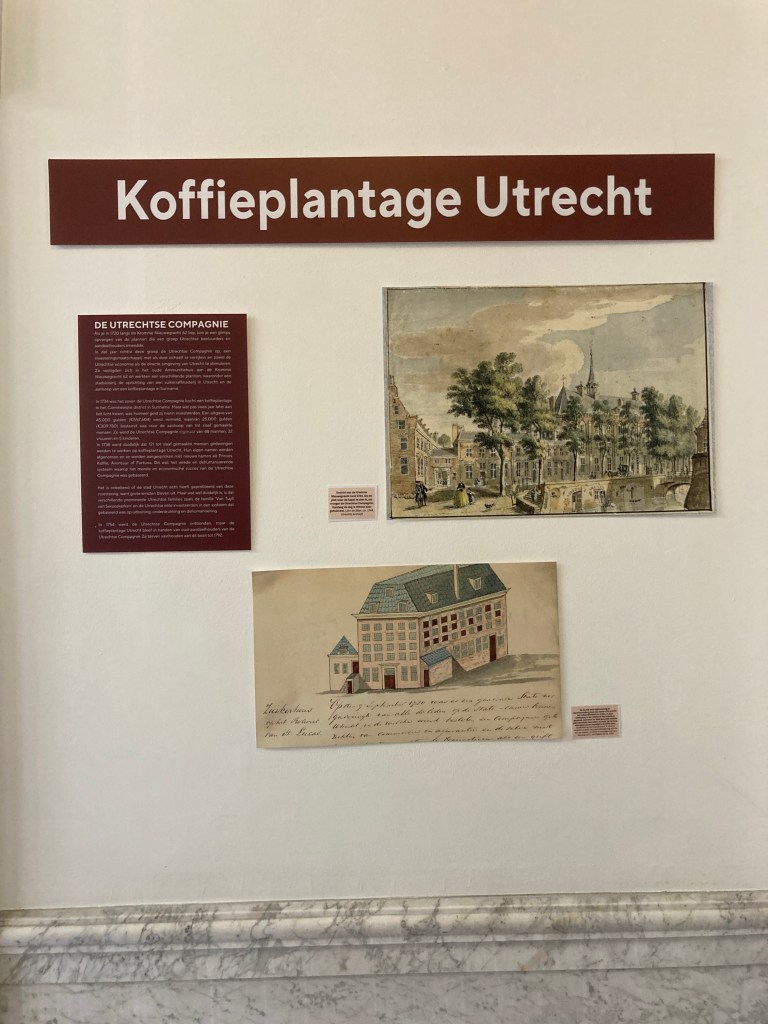
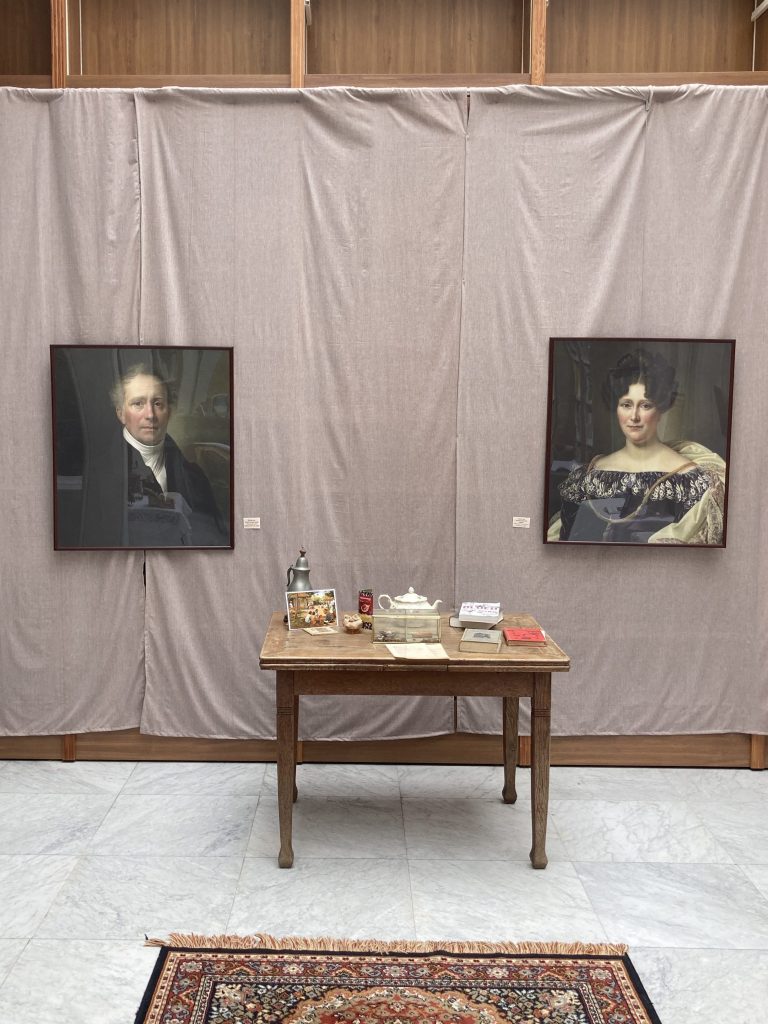
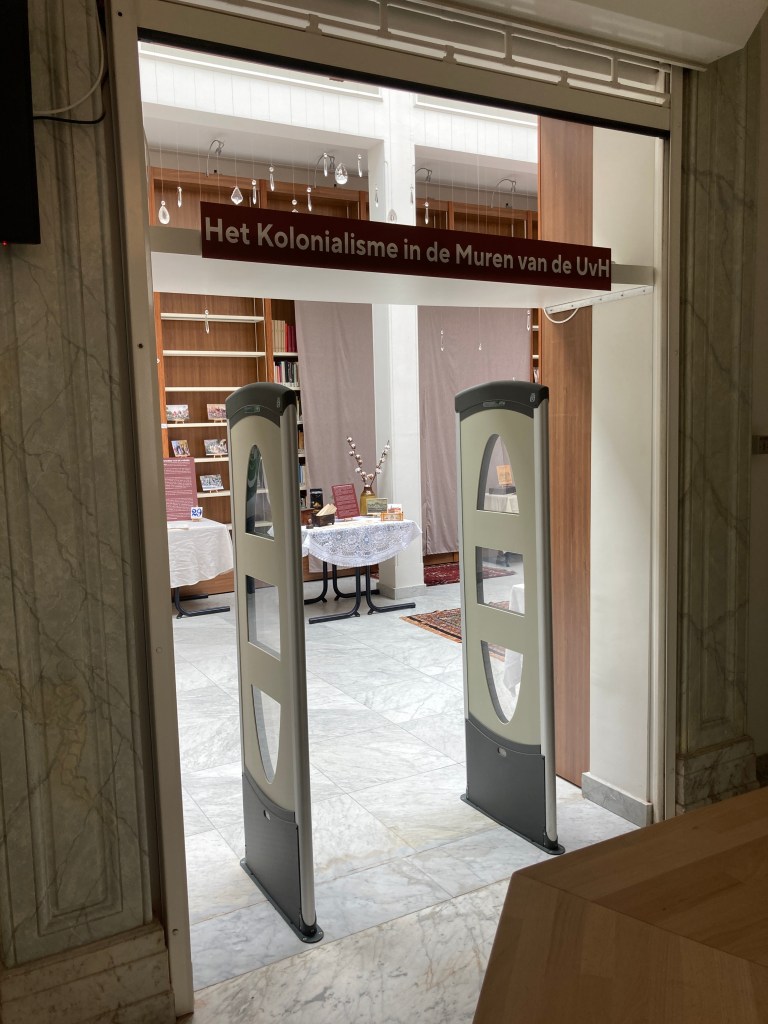
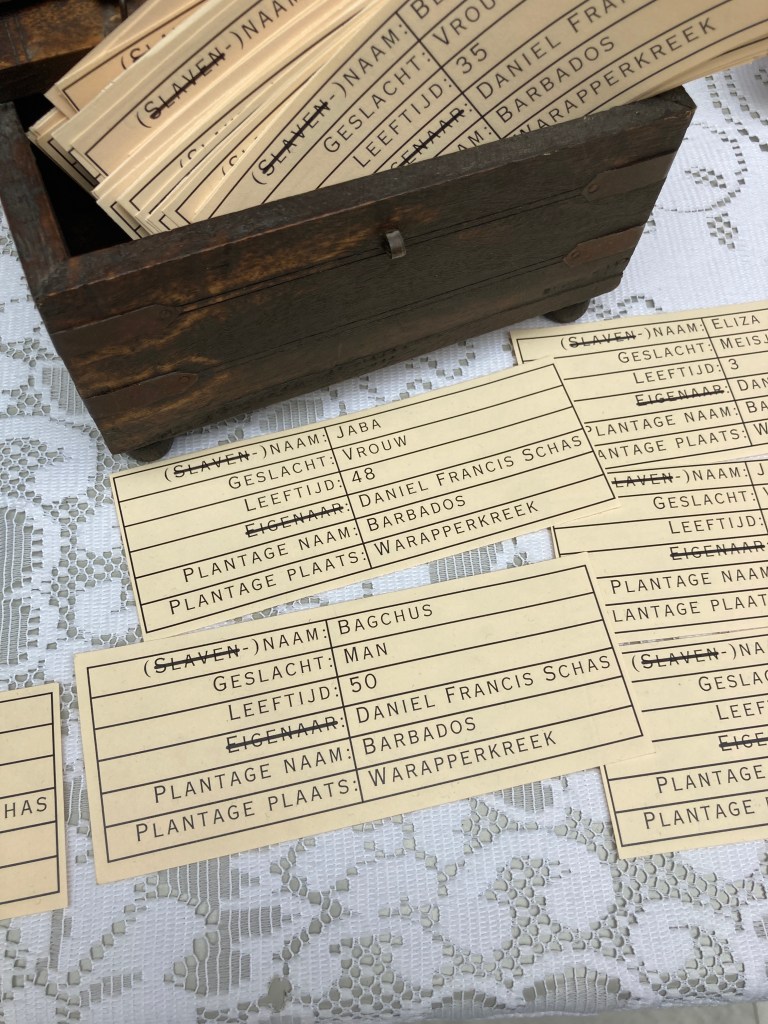
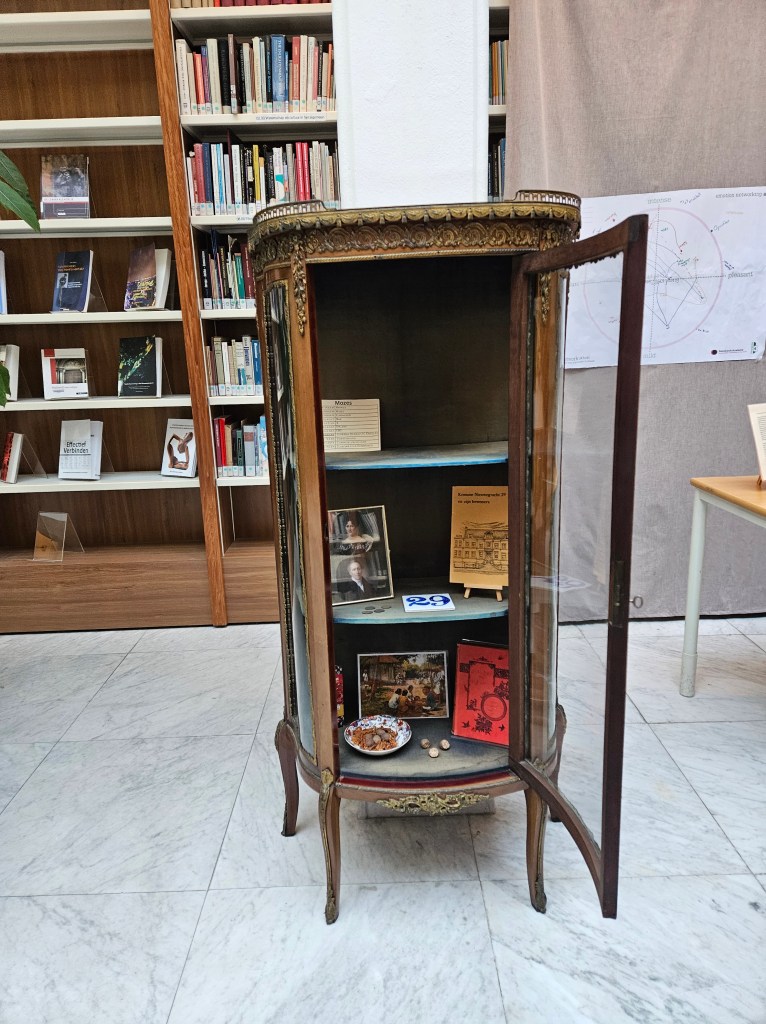
The exhibition called The Multi-Voiced Colonial Past of the Kromme Nieuwegracht (May-October 2023) displayed multiple voices included in the slavery past of our University building and its street; making visible the multilayered history of the colonial past and its legacies. The lens of multivoicedness facilitated a dialogue that showed the locality of this global history and how it unfolded at the Kromme Nieuwegracht; reaching beyond the standard black/white positionalities and binary guilt/innocence constructions, allowing new terminologies to come to the fore.

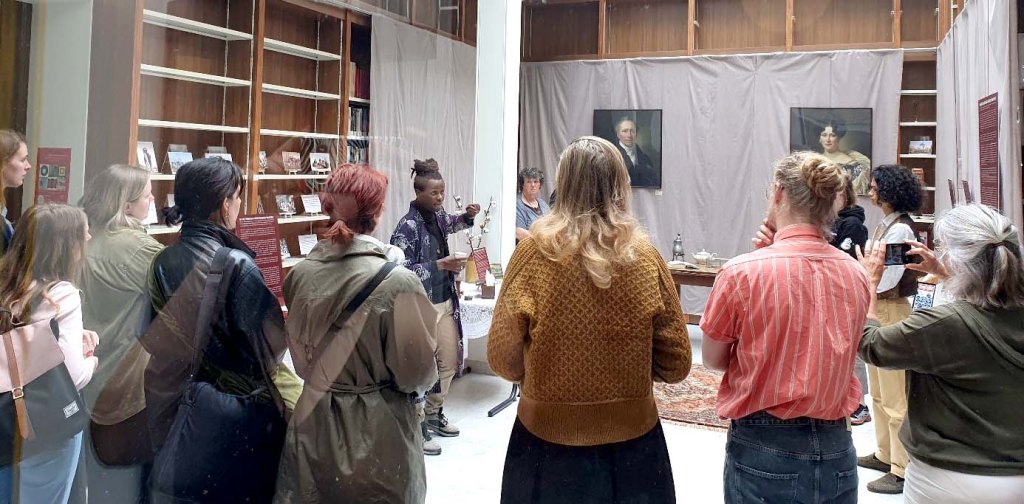
The exhibition
“This exhibition reminds us that our past is closely intertwined with our present and future. By delving into the depths of our colonial history, we are confronted with the uncomfortable truths and injustices that have shaped our society. We need to reflect on the systematic and structural issues that perpetuate inequality, discrimination, racism, unequal distribution of capital, and oppression. By understanding the underlying causes, we can actively work towards dismantling these harmful systems and promoting a society based on justice, equality and respect for everyone.”
– Introduction of the exhibition
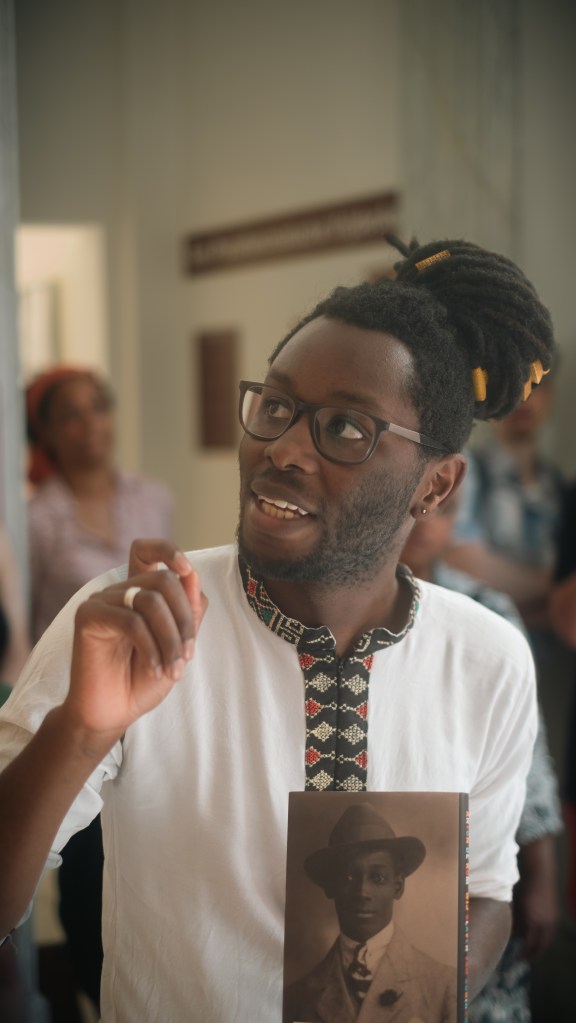
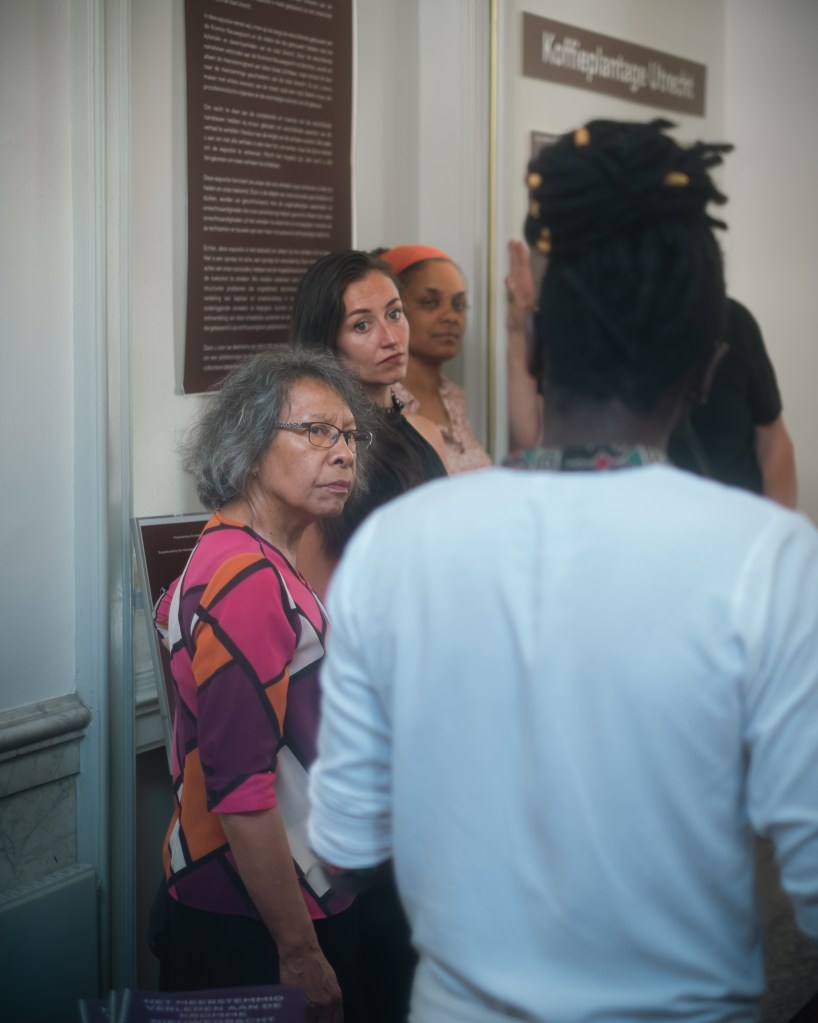
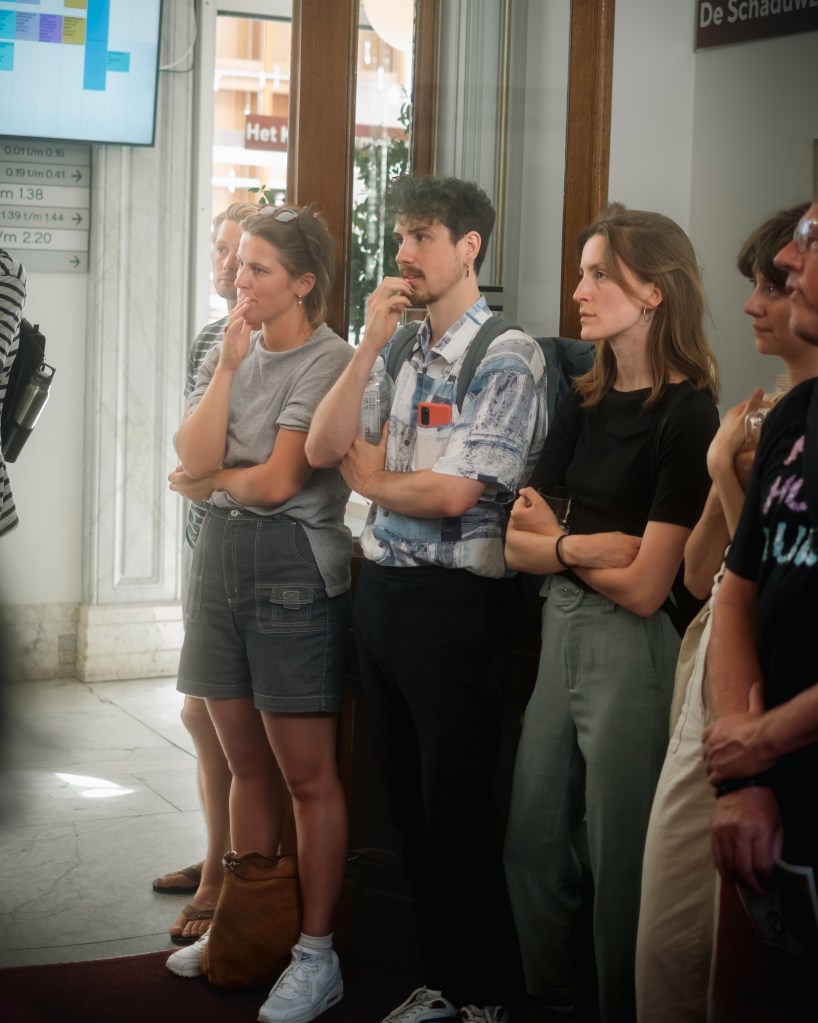
“Every photograph is a discourse on the world, and idea we have about it” (Productive Archiving, 2023)
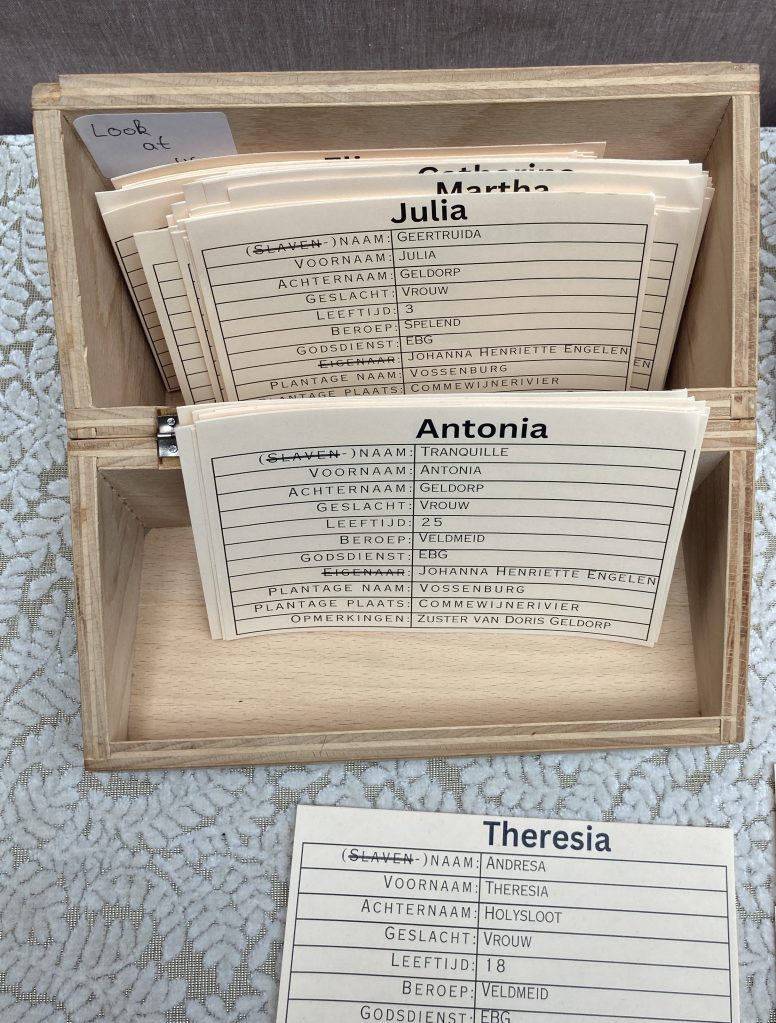
The ritual
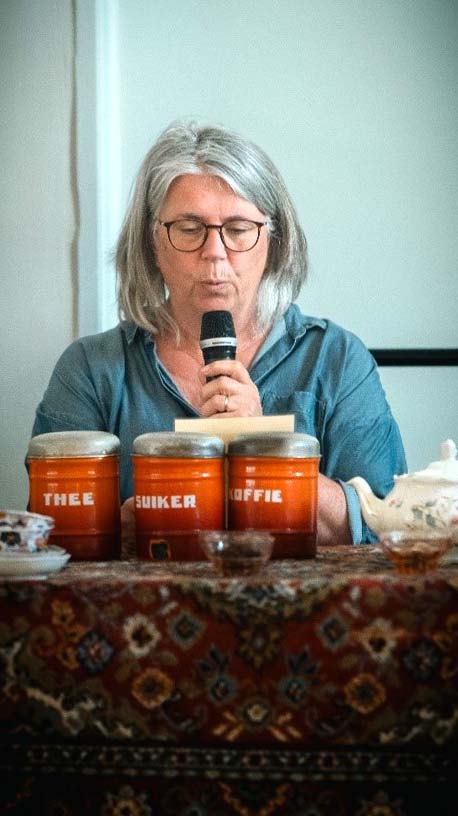
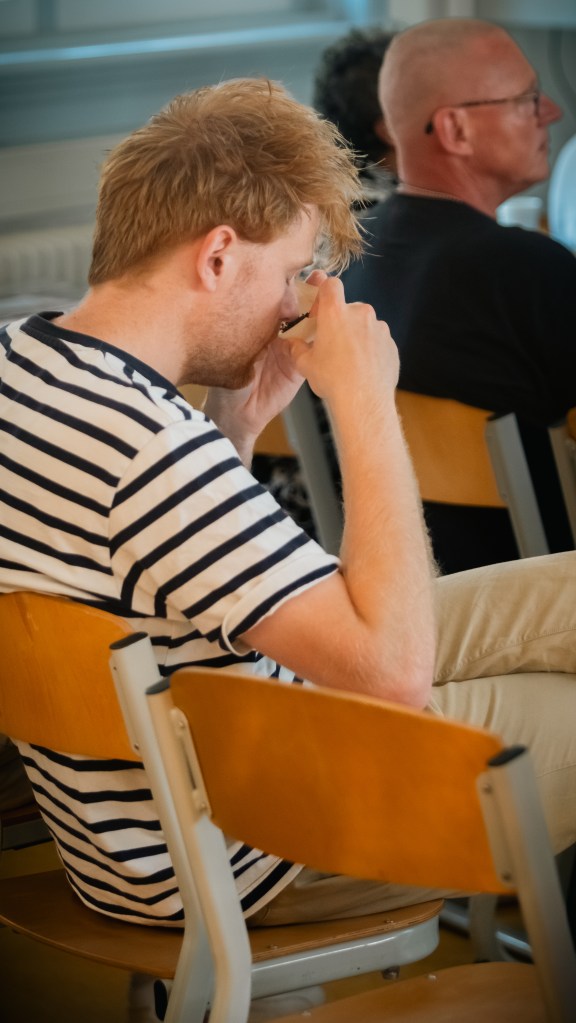
The ritual Grandma’s Kitchen ties in with the exhibition about the colonial past of our University building at the Kromme Nieuwegracht 29 and its surrounding. In the ritual a space was created where ‘witnesses’, sitting at Grandma’s kitchen table, read aloud chosen text passages about the violent history of those spices that embody the Dutch colonial past, still very much present in grandma’s kitchen. After the witnessing, the attendees were invited to experience the smell of coffee, tea, cloves and nutmeg. The ritual was designed as a means of bringing alive and experiencing the relationship between the everyday (our daily food) and the suffering caused by Dutch colonial rule.

The Ritual:
‘Grandma’s Kitchen’ (Oma’s Keuken)
“The ritual was developed in a course on ritual studies at our University […] In this ritual I imagine a table in my Grandma’s kitchen where we invite five people to witness the Dutch colonial past. I had brought my grandmother’s table to the University. We had set it with a beautiful carpet, which we filled with all kinds of traditional elements from my white grandma’s kitchen. Like enamel pots, an old teapot, etc. There are also four bowls on the table with four different scents. Coffee tea and spices”.
- Jake Smit, Celebrant

‘Witnesses’: Implicatedness
We referred to the attendees of the ritual as ‘witnesses’ and emphasized how we are all in one way or another implicated; influenced by the concept of ‘implicated subject’ by Michael Rothberg. According to Rothberg, one´s position as a perpetrator, victim, or bystander, particularly in relation to historical injustice, is not always clear. Many find themselves in complex, hybrid positions of ‘implicatedness’: one could be involved in positions of power and privilege, without directly doing, or having done, the damage itself, but yet having inherited or benefited from regimes of domination. This means that the implicated subject is not about a position of guilt regarding historical injustice, but about a position of taking and experiencing responsibility.
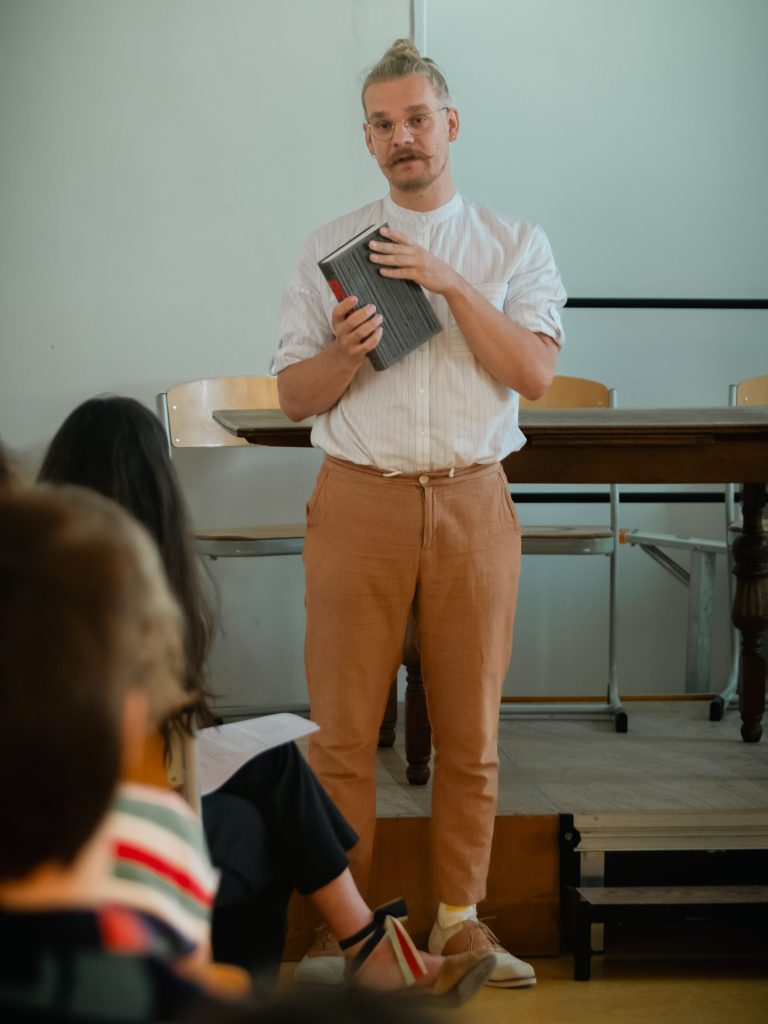
“We actually wanted to offer three steps to participants: provide space for what emotions and experiences surface through experiencing the colonial past, such as shame or guilt, or pride, or disgust. Then we want to invite participants to explore these feelings further, to express them […] Then the invitation is to act on […] that experience or insights”.
– Jake Smit, Celebrant
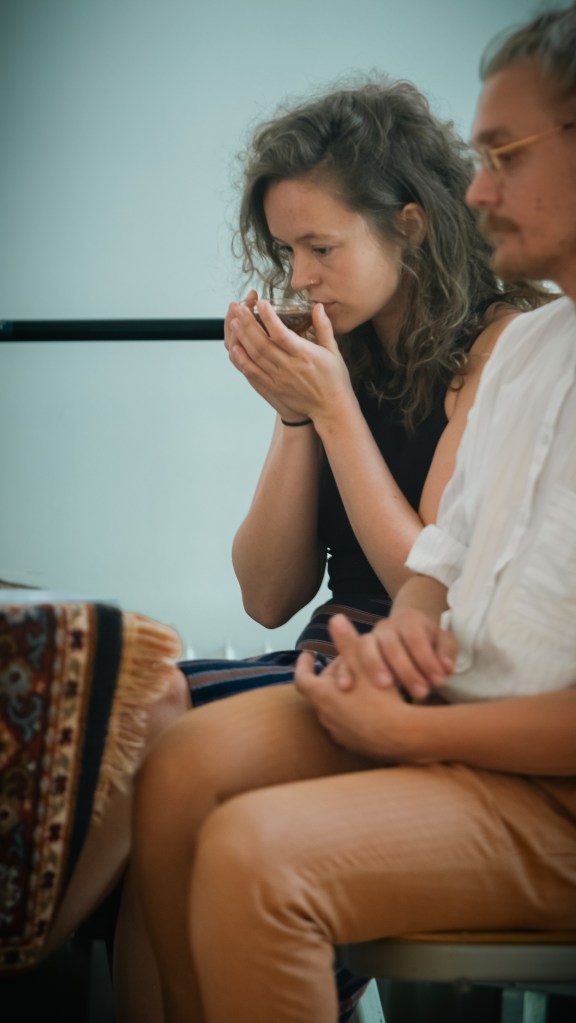
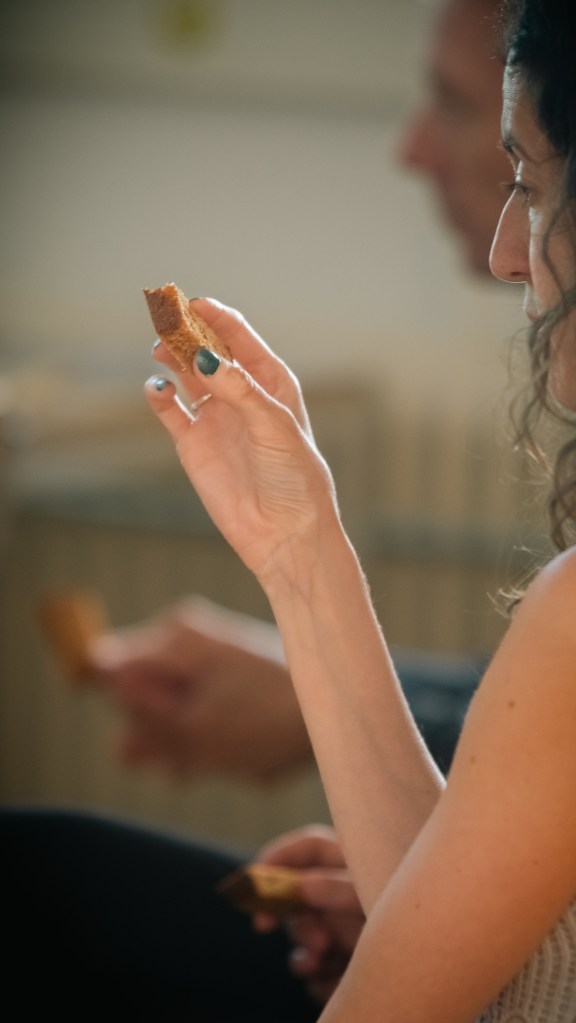
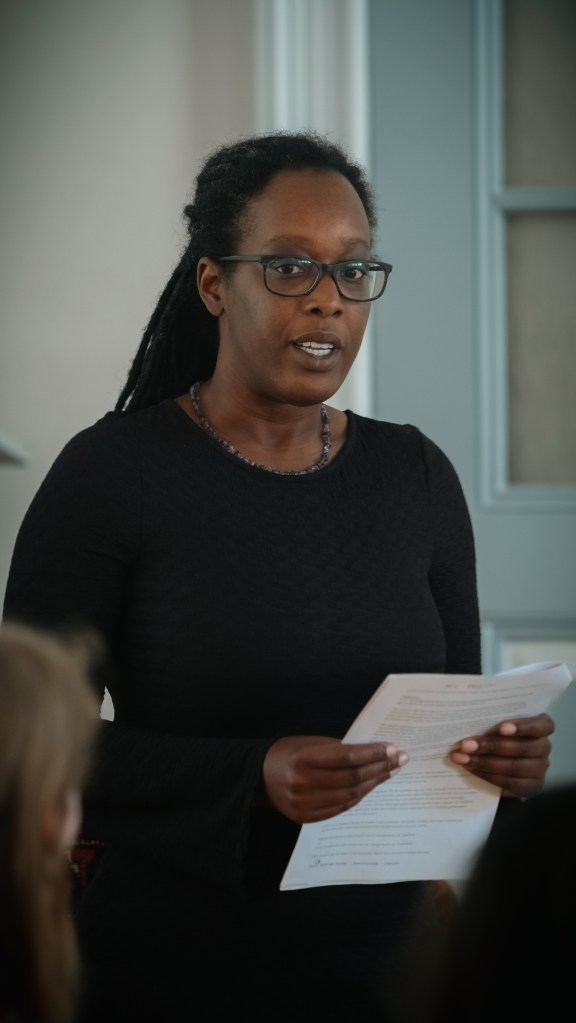
“[…] the story of resistance also [came with] a [sense of] pride and a sense of belonging.[…] Thanks to coffee and tea and spices. Alongside the resistance and resilience of the foremothers and forefathers who worked under degrading conditions in the profit model that was the colonial system, there was also a kind of pride. Thanks to their labor and sacrifices, enormous prosperity has been built here. Which I can also enjoy. If anything – as a direct descendant, I may actually have a claim to the fruits of their labor”.
– Graciëlla Ritfeld, Celebrant
Reflections
“It was exciting to look at my own lived experience: what ties do my memories have to the colonial past of the Netherlands and the University?” (Student)
“When someone mentioned that acknowledging, feeling, and sitting with the emotion is also already ‘doing’, it touched me”. (Student)
“Ritual language is a powerful tool for universities to take responsibility for the history of slavery. It creates awareness and promotes engagement with historical injustice without assigning blame. Yet it can lead to counterproductive reactions such as shame and guilt, which universities can respond to by fostering an open and non-defensive environment. Repeating such rituals and safe follow-up conversations is essential to maintain awareness and address structural inequality”. (Master thesis Pathways of Feelings: Ritual language as a tool for awareness of responsibility at universities with a local history of slavery, by Rosa Mul, 2023).
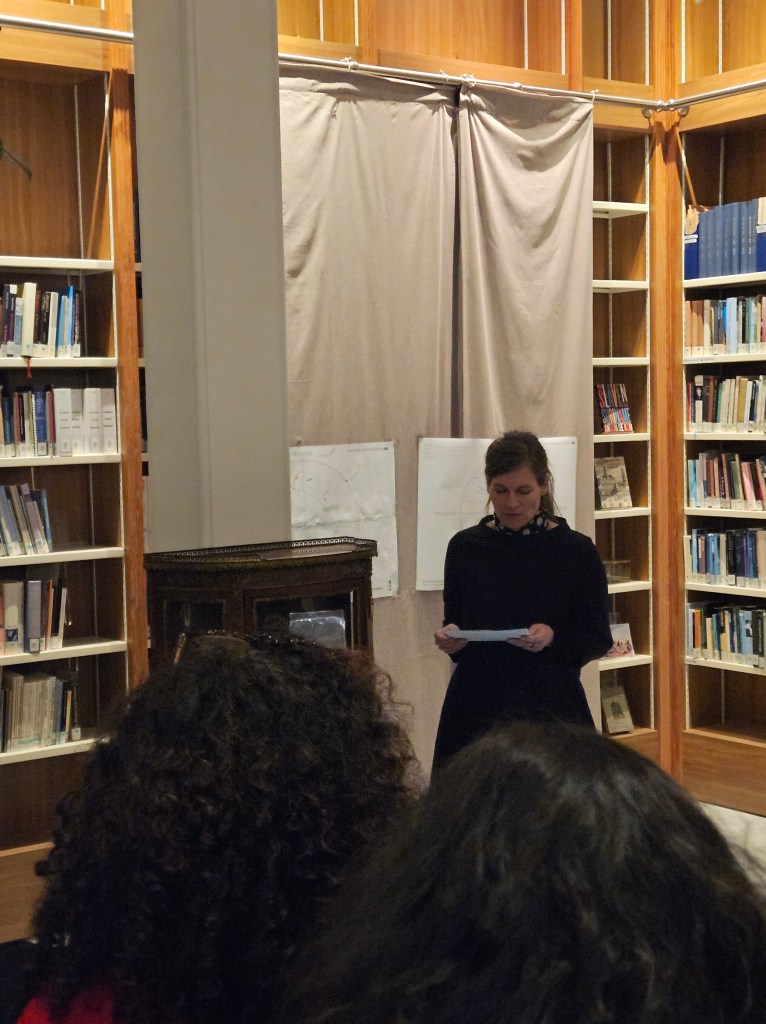
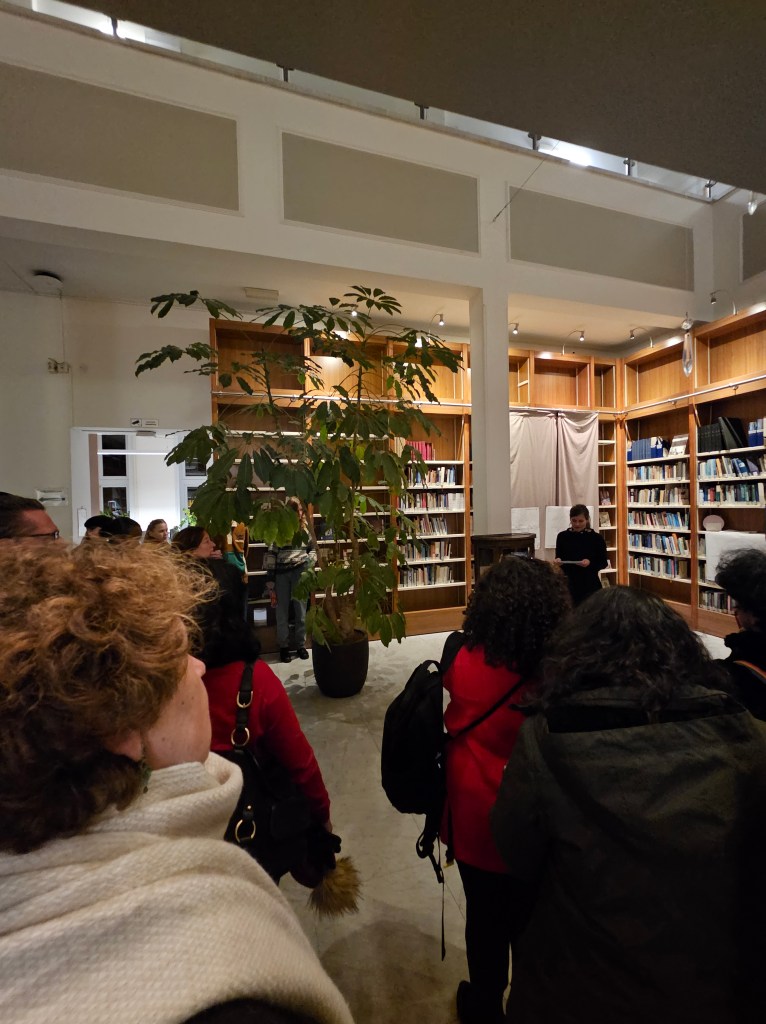
“On the last day of the exhibition, I was struck how the emptiness of the library contained a tension – about the risk of forgetting when remaining unfilled, but also about the potential the space holds to narrate new unheard stories.” (Limor Reshef, Junior Researcher)
“What touches me most is the cruelty and de-humanizing practices of the Dutch who kidnapped people from their homes and treated them as property, and worse. I can’t get my head around how entire societies, generation after generation has so inhumanely oppressed its fellow human beings, to avert responsibility even now, in the face of so much extreme and extremely obvious imposed suffering. […] I would very much like to see acknowledged that, how then the slavery system was justified, it is an incredibly dangerous and dormant racist line of thought, and recognize and acknowledge how that line of thought still exists today and hinders our society from being more humane + it’s our responsibility to stop that. + I would really like to read and see more about the culture of the people who were forced to work on the plantations of Schas and Engelen, as far as that can be traced.” (Student, guestbook)
Acknowledgements
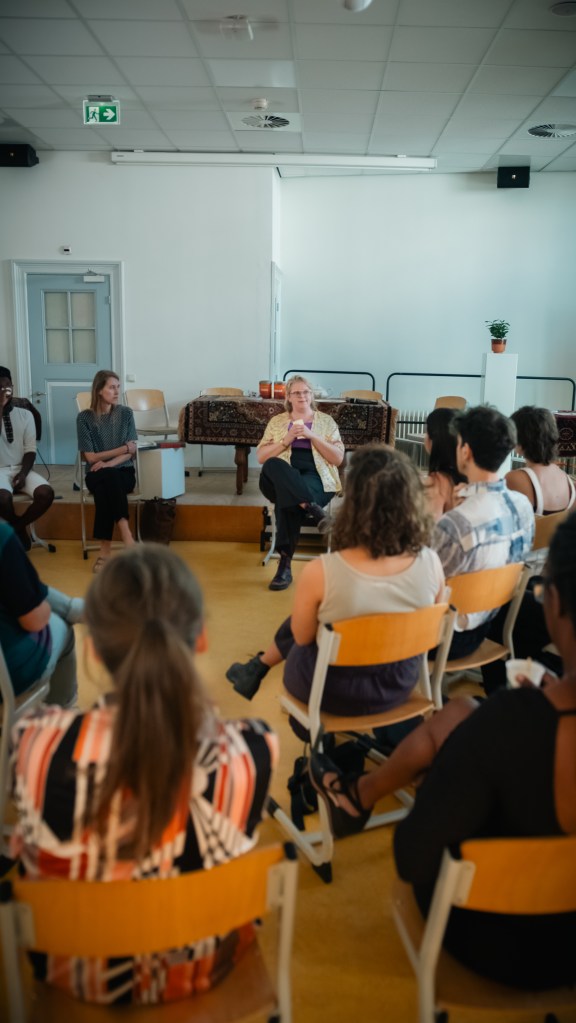
“Thank you all for being here – to acknowledge that this history has not been told and listened to enough, to be experienced as our multivoiced and shared history.”
“This acknowledgment matters in a dialogue about a more just future.”
“We want to acknowledge that I speak to as part of a university that is housed in a building that was once bought with money earned from chattel slavery in the Dutch colonies, in the East and the West, in the Caribbean and the Indonesian Archipelago.”
“We want to acknowledge that we are part of the institution of humanism and humanistic studies, which has had throughout history material, social and intellectual links to slavery and colonialism.”
“We want to acknowledge the emotional, intellectual and social labor by anti-racist, de colonial, intersectional thinkers, activists and scholars. They work hard to reform, deconstruct and reconstruct this institution of humanism and society as such. We are grateful for their work.”
– Nicole Immler, at the opening of the ‘living monument‘, January 30th 2024
Colophon
Project:
‘Colonialism in the Walls of the University of Humanistic Studies’
Team:
Jake Smit/lead: ritual, Farach Winter/lead: exhibition, Limor Reshef/lead: organisation, Niké Wentholt and Nicole Immler/supervision)
Advisory board:
Mercedes Zandwijken, Fiona Frank, Niki Lou Eleveld, Caroline Suransky, Joanna Wojtkowiak
Photography:
Jop van de Kam
Funding:
Municipality Utrecht, Dialogics of Justice, UvH
 Homepage