Media

Towards a broad societal conversation about what repair constitutes

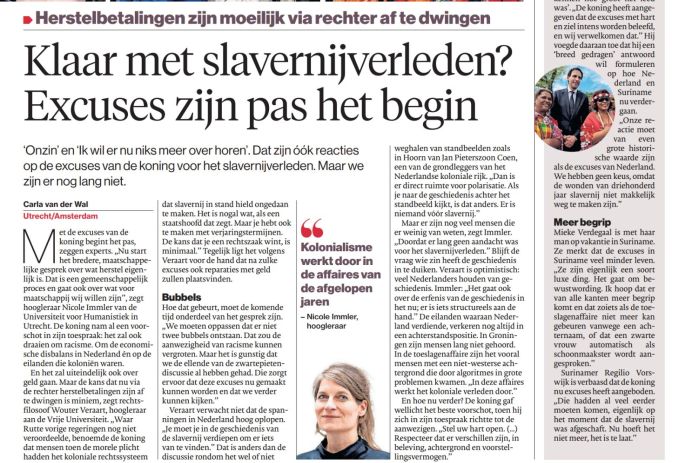
2/7/2023 ‘Klaar met slavernijverleden? Excuses zijn pas het begin’ – AD

In this article by Carla van der Wal about the commemoration of the Dutch slavery past, Nicole Immler argues for a broad societal conversation about what repair constitutes. “This is a collective process and also revolves around what kind of society we want to be.”

Lees verder
Media

Interview on repair for the slavery past

30/6/2023 ‘Hoe zien de herstelbetalingen voor slavernij eruit?’ – Trouw

Nicole Immler was interviewed by Robin Goudsmit en Maurice Timmermans about repair for the slavery past. It is the elephant in the room during the slavery commemoration: reparations. Will they ever come, and what should restitution look like?

Lees verder
Media

Opinion piece on how ruling of ‘statute of limitations’ is misplaced in the case of institutional suffering

05/04/2023 ‘Verjaring beschermt foute instituties’ – NRC

Naomi Ormskerk and Nicole Immler published an opinion piece in reaction to the ruling in a claim brought to the court by women who had suffered institutional abuse within a religious institution. Thousands of girls were forced to perform hard labor in Catholic ‘charitable institutions.’ The ruling of ‘statute of limitations’ is misplaced in this case of institutional suffering.

Lees verder
Media

Opinion piece on how both religious institutions and victims of institutional abuse have a role to play in restoration

11/01/2023 ‘Zowel de slachtoffers van misbruik als kerkelijke instituties hebben een rol in het herstel’ – Trouw

Naomi Ormskerk wrote an opinion piece on how forced labor and exploitation within Catholic institutions have caused significant suffering, for example, among girls in the institutions of ‘De Goede Herder’. In addressing this harm, both the victims and the responsible institutions have a role to play in the process of restitution and reconciliation.

Lees verder
Media

Hoe je excuses aanbiedt voor historisch onrecht

28/11/2022 ‘Een historisch excuus aanbieden, hoe doe je dat? Deze vijf zaken kunnen het maken of breken’ – Trouw

Nicole Immler in Trouw on how to offer apologies for historical injustices. Rianne Oosterom writes about the debate surrounding apologies for the history of slavery and asks how it can be done properly. Professor Nicole Immler often observes the same mistakes being made when offering apologies for historical injustices.

Lees verder
Media

Opinion piece calling on Shell to reckon with its controversial legacies in the Netherlands and Nigeria

27/11/2022 ‘Mensen gaan boven economische belangen’ – NRC

Obiozo Ukpabi wrote an opinion piece where she calls on Shell to reckon with its controversial legacies in the Netherlands and Nigeria. Ukpabi writes in reaction to the decision of the four Nigerian widows who sued Shell for their alleged complicity in human rights violations in the Niger delta, to drop their case. After years of litigation they see no more options to seek redress for the ‘unavoidable consequences of the destructive logic of profit over people’.

Lees verder
Media

Reconstructing how their history became our history

12/11/2022 ‘Hoe de discussie over het slavernijverleden van de brievenrubriek naar de voorpagina verschoof’ – Trouw

In this article, Rianne Oosterom reconstructs how the Dutch slavery past moved from the letters page (with a letter from Volkskrant reader Roy Kaikusi Groenberg) to the front page of the public debate. Recently, the Dutch cabinet announced that it will offer formal apologies for the role of The Netherlands in the slavery past. Nicole Immler provided Oosterom with commentary on this decision.

Lees verder
Media

Public lecture at the Commemoration of boys and women’s camps in Indonesia during the Japanese occupation

21/08/2022 ‘Herdenken om te verbinden in de meerstemmigheid’ – Impact Magazine

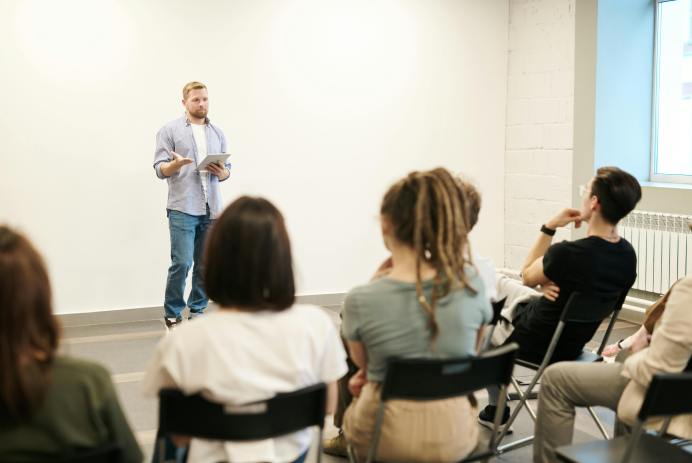
On this special occasion Nicole Immler gave a lecture on ‘Commemorating to Connect in Multivoicedness’. The organisers of the commemoration wished to reflect on the question of renewal of their commemorative tradition. How can we do this in a way that remains relevant for a younger generation when, in future, there will be no more survivors of the atrocities to commemorate with?

Lees verder